Monday, 9 May 2011

How To Create Bonsai Forest

The spring season is the best time of year to create a group planting. First of all suitable trees need to be selected; a group planting should consist of different sizes of trees, a few tall ones for in the middle and several smaller ones to plant on the sides. Use trees mostly growing upright, as the composition will look unnatural when using different shapes of trees. How many trees to use in total is up to you. Selecting the right pot is very important! Choose a large and quite shallow pot. Use a soil mixture of akadama, fine gravel and potting compost mixed together in a ratio of 1/2 to 1/4 to 1/4.

After having selected the trees and the pot, follow the step-by-step plan to create the group planting:
1. Cut of several pieces of copper wire (of about 10 cm or 4’’ long) and attach these with waterproof glue to the pot. The wires will be used to anchor the roots and stabilize the composition of trees.
2. To provide for a good drainage, fill the bottom layer of the pot with fine gravel and akadama in a ratio of 1/2 to 1/2.
3. Now prepare the trees by removing any dead branches and pruning the lower branches to create a trunk (till about 1/3 of the tree’s height). Take the trees out of their pots and after having removed the soil carefully disentangle the roots.
4. Place the taller trees somewhat out of the middle in the pot and add smaller trees around them, when you are satisfied with the composition of the group planting, carefully use the copper wires to anchor the trees.
5. Use the prepared soil mixture to fill the pot and cover all the roots.
6. Use some moss to cover the surface, to protect it against erosion.

Place the newly formed Bonsai group planting in the shade for at least a few months and wait with training the trees until the next spring.

Eko Bio Pens

Plastic ballpoint pens are one of the world's most notorious 'gone missing' objects -- but with pens made from Cereplast's bioplastic, you don't have to worry so much about what happened to them.
The resins that make up the pen are sourced from corn, wheat, tapioca, and potato, and break down in a fraction of the time that traditional pens do after they're trashed -- the classic styles can stay in landfills for as long as 400 years.

Thursday, 5 May 2011

The Venus Flytrap

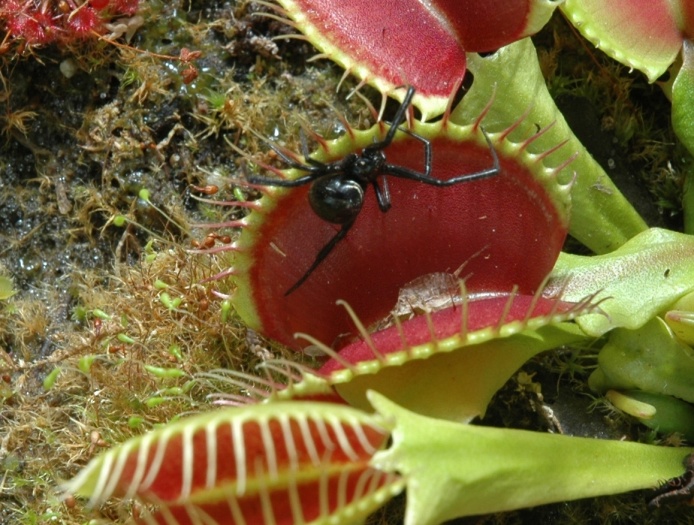
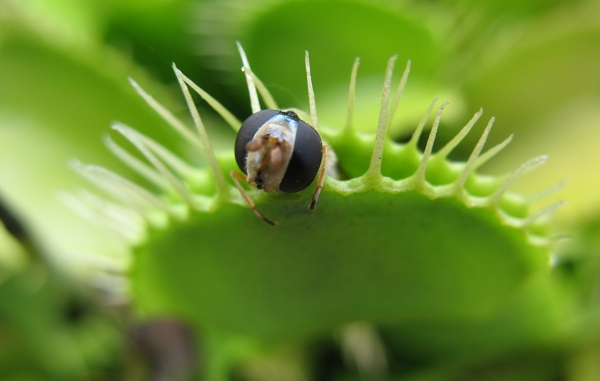
Or also known as Dionaea muscipula, is a carnivorous plant that catches and digests animal prey, mostly insects. Its trapping  is formed by the terminal portion of each of the plant's leaves and is triggered by tiny hairs on their inner surfaces. When an insect or spider crawling along the leaves contacts a hair, the trap closes if a different hair is contacted within twenty seconds of the first strike. The requirement of redundant triggering in this mechanism serves as a safeguard against a waste of energy in trapping objects with no nutritional value.


Reasons Why They Should Legalize Industrial Hemp

Hemp has been used for industrial purposes including paper, textiles, biodegradable plastics, construction, health food and fuel. Hemp is one of the faster growing biomasses known. For a crop, hemp is very environmentally friendly (with the exception of chemical fertilizers used in industrial agriculture) as it requires few pesticides and no herbicides. So imagine how much nature we would safe by just using this amazing plant.


Check out documentary film about the struggle to legalize industrial hemp in USA with Woody Harrelson, Ralph Nader, Gatewood Galbraith, Craig Lee, Willie Nelson, Merle Haggard,and many others.

Flowers Growing (Time-Lapse)

Time lapse video of flowers growing and blooming should adequately acquaint you with their natural majesty.Growth is a really beautiful process, even more fun if you watch it in slow-motion. Enjoy!